Wednesday, 8 August 2012

Time has stopped at Antiques House


Mechanical clocks came as an advancement to the metrics of time as they the old water clocks, which, by the 13th century, had been around for millennia. Water flowed steadily into a vertical tank and the rising water level indicated the time of day. That's simple enough, but, like mechanical clocks, water clocks had become ornate structures with gears and dials. Like mechanical clocks, they tolled the hours and displayed the planets. As expected the new device was smaller in size and more delicate, though the size of a freestanding floor clock either of this era, ore even one much “younger” would seem like a large piece of furniture today...

Tuesday, 7 August 2012

Faces of Art | Emilia Xanthopoulou

Emilia Xanthopoulou was born in 1983 in Thessaloniki. She studied at the School of Fine Arts of Thessaloniki (2003-2008) and extended her studies for a year at the School of Fine Arts in Madrid. Subsequently she undertook graduate studies at Central Saint Martins College of London (2009-2010) with Joanna Greenhill, where she was awarded the Mishcon De Reya Art Prize...  «I think when the simple painting really becomes Art, like any Art, fosters knowledge and creates conditions for new horizons. Observing the shape, color, form, light and shadow, I am constantly trying  to broaden my own horizons, and, within my skills, to actually produce Art...».

Monday, 6 August 2012

Nikolaos Gyzis, paintings that rejoice life 111 after the demise of their creator

NOT many things seem so unnatural to me as the claim that the classic greek painter Nikolaos Gyzis was the academic standard of his times, unless accompanied with the clarification of what was consider academic in his times! In this article I would like to present to our readers one of the most dynamic personalities in art of all eras in Greece, an excellent man and artist exemplar for the turn of the 20th century, for whom books have been written yet essential elements of his personality and paintings are not stressed, or known to the non specialized public, and whose contribution changed everything in Greek Art...

Sunday, 5 August 2012

The art discource of Fotini Hamidieli -an interview with the artist

FOTINI HAMIDIELI is an artist of rare breed in our era; one that assimilate all and every step of her existence into a new form, though keep walking at the same path she has chosen. Her strong personal style combined with a self – referential context within her art, makes her work distinct. Through our co-operation in Myrό Gallery we did not just meet a great artist, but a great lady as well, having the chance to discus on various subjects and aspects of the artistic experience. This interview was then set up, concluding our discussions and giving birth to others. An interview to Paris Kapralos.


Saturday, 4 August 2012

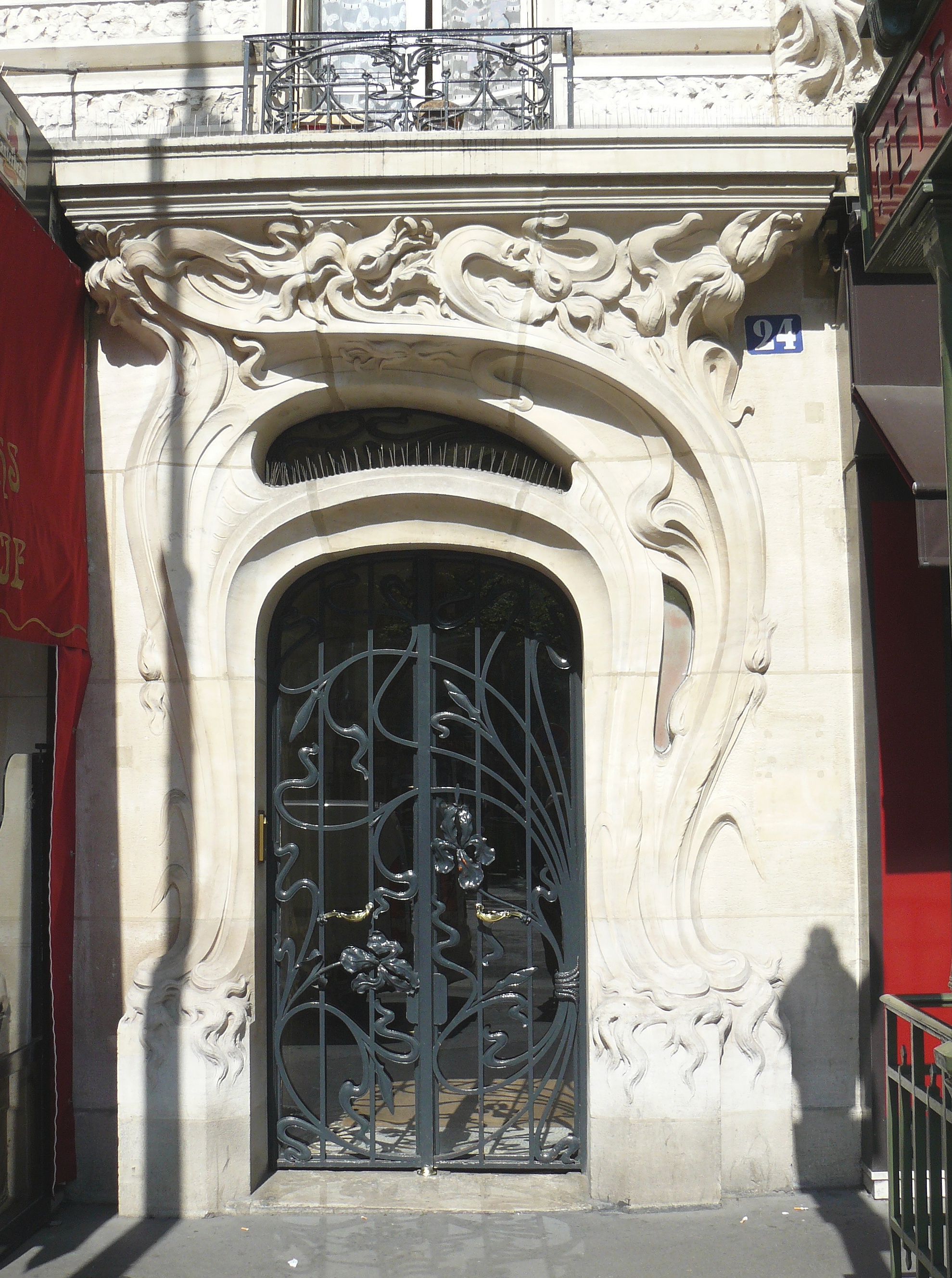
The Art Nouveau style and its era

A largely disparate movement that developed in the late 19th century until the early 20th century, the Art Nouveau (which means "New Art" written in french) as it is commonly known-and even worldwide affected every aspect of aesthetics in a catalytic grade. Despite the universal acceptance of the French term, the German name of the movement "Jugendstil" and Austrian "Secession" is equally acceptable, while other names previously received are remarkable more for historic reference: "Stile Liberty" was called in Italy, "Modern style "and, later, when modernism prevailed," Early Modernism "in America," Modernism "in Spain. Additionally, he was named «stile floreale»-while the actual style was already in bloom- a title deriving from the main decorative element, the curved undulating line, which often develops as a stylized flower and its sublime symbolisms...


Art Nouveau is rarely so fully in control of architecture: 
doorway at place Etienne Pernet, 24 (Paris 15e), 
1905 Alfred Wagon, architect.