Showing posts with label Special Reports. Show all posts

Saturday, 4 August 2012

The Art Nouveau style and its era

A largely disparate movement that developed in the late 19th century until the early 20th century, the Art Nouveau (which means "New Art" written in french) as it is commonly known-and even worldwide affected every aspect of aesthetics in a catalytic grade. Despite the universal acceptance of the French term, the German name of the movement "Jugendstil" and Austrian "Secession" is equally acceptable, while other names previously received are remarkable more for historic reference: "Stile Liberty" was called in Italy, "Modern style "and, later, when modernism prevailed," Early Modernism "in America," Modernism "in Spain. Additionally, he was named «stile floreale»-while the actual style was already in bloom- a title deriving from the main decorative element, the curved undulating line, which often develops as a stylized flower and its sublime symbolisms...


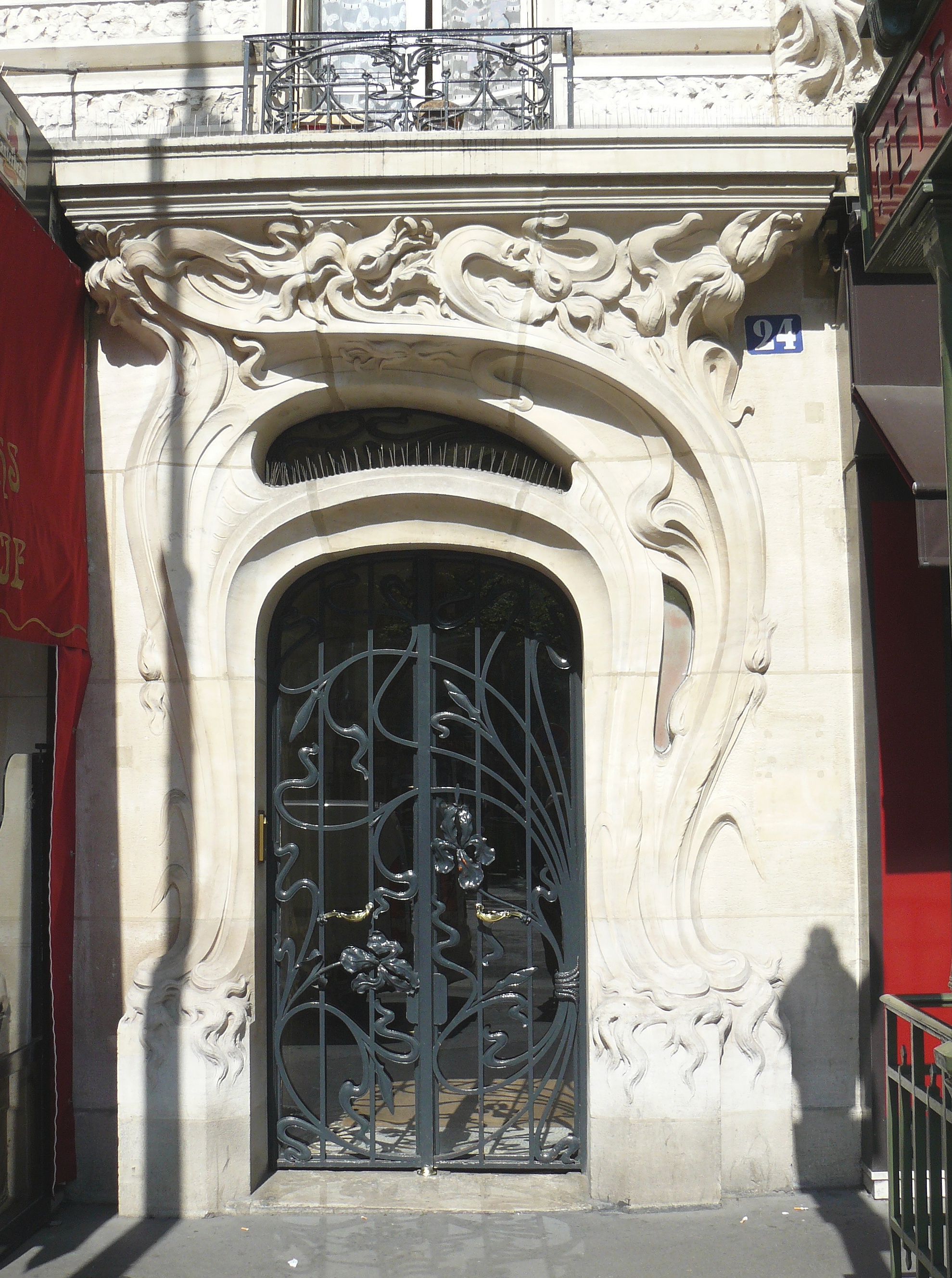
Art Nouveau is rarely so fully in control of architecture: 
doorway at place Etienne Pernet, 24 (Paris 15e), 
1905 Alfred Wagon, architect.

Monday, 4 June 2012

Time has stopped at Antiques House


Mechanical clocks came as an advancement to the metrics of time as they the old water clocks, which, by the 13th century, had been around for millennia. Water flowed steadily into a vertical tank and the rising water level indicated the time of day. That's simple enough, but, like mechanical clocks, water clocks had become ornate structures with gears and dials. Like mechanical clocks, they tolled the hours and displayed the planets. As expected the new device was smaller in size and more delicate, though the size of a freestanding floor clock either of this era, ore even one much “younger” would seem like a large piece of furniture today.

The accuracy of these mechanical clocks was limited at first. In the 16th century, pocket watches were discovered, but they were quite big as well, and were worn on a chain round the neck, and of course the first "table" clocks made their appearance, although most of them were to be found resting on parapets of large fireplaces, in the case they were not considered a "furniture" themselves! Around 1700 Queen Anne of England offered a small fortune as a reward to anyone who would discover a way to calculate with the maximum accuracy longitude. Ten years later, the watchmaker John Harrison, discovered that for an accurate determination of longitude requires accurate time measurement. So the Navy utilized for the first time what later became known as the “Harrison Marine Chronometer”, which measured the time with great accuracy and was tested by famous explorers such as Captain Cook. This device won the Queen's supremacy and led to the construction of the first precision clock. The next century with the advancement of technology the first wristwatches began to emerge, which were worn only by women, while men used pocket watches only. This social habit was reversed in the First World War that the great need for consistency in time became understood, and so the wristwatch was worn by men. In the modern era the clocks became more elaborate objects...

In the slideshow you will see some of the most beautiful watches that will go through the auction of June 6 in Antiques House. For more information (prices start as many elements for each object), find the root directory of the auction by clicking HERE


Monday, 23 April 2012

Nikolaos Gyzis, paintings that rejoice life 111 after the demise of their creator

NOT many things seem so unnatural to me as the claim that the classic greek painter Nikolaos Gyzis was the academic standard of his times, unless accompanied with the clarification of what was consider academic in his times! In this article I would like to present to our readers one of the most dynamic personalities in art of all eras in Greece, an excellent man and artist exemplar for the turn of the 20th century, for whom books have been written yet essential elements of his personality and paintings are not stressed, or known to the non specialized public, and whose contribution changed everything in Greek Art.
By Paris Kapralos

Nikolaos Gyzis, an extremely dynamic, cordial personality and a truly natural talent, was able to assimilate and blend in a rare manner all the knowledge and experience he came in contact with, and to transcribe it in a way that contributed to the progress of Greek art at his times, as very few other visual artists have accomplished. His works retain their strength and their emotional charge, even 111 years after his death. His works do not remain merely "immortal", a term reserved for other major painters in the arts history; they often remain alive.

Born in a poor family of carpenters Onoufrios Gyzis Gyzis and Margaret, nee Psaltis, in a little village named “Sklavochori” on the island of Tinos the 1st of March 1842, he followed the family to resettlement in Athens in 1850 and attended the so called "School of Fine Arts" (1854 - 1864), with teachers Agathaggelos Triantafyllou, Ludwig Thiersch and Filippos Margaritis, replaced in 1855 -after his retirement- by Nikiforos Lytras, who became close friends with the young Gyzis. It is said that it was Lytras who urged Gyzis to continue with his studies at the  Royal Academy of Fine Arts in Munich from from June 1865. Before this was possible many things had to be settled first. The young artist was deprived of a fortune that would allow him to move abroad, if it wasn't for a charity of the of the church to assist him encouraged by another man that foresaw the talent of the young artist, the art fanatic Nikolaos Nazos, who also added his funding to this of the church to support Gyzis.

His first teachers in Munich were Ansouts Hermann (Hermann Anschütz) and Alexander Wagner (Alexander Wagner), while in 1868 -again with the encouragement of Lytras -was admitted to the laboratory of Karl von Piloty, a famous teacher with a significant personal focus on multifaceted historical paintings. Nevertheless Piloty had the reputation of an excellent teacher that didn't force this students to replicate what he did, but to perfect their design and enrich colour ranges, otherwise leaving room for personal expression and development to them


Actually, the marathon of recognition begins on 1870 for Gyzis, with so many awards as many nominations and a glimpse of financial independence from his donors and protectors. In 1872 he returns to Greece temporarily, setting up his atelier in the centre of Athens, where he remained nearly a year and a half strolling around the city and travelling around the country very often in search fro the Greek representative types of face, body, stature. Next, he travels to Asia Minor along with Lytras in search of similar studies, collecting important material. In that period discounted original designs with extreme stunts of Anatolia; all of these paintings are rare in light, colour, and realistic expression. Then he travels to Tinos and Megara -where he paints a series of projects, and for a few months he resides in Smyrni (Izmir). Disappointed by the prevailing conditions in Greece in May 1874 he departs from Athens, having  a heavy load of experience and pictures in his artistic baggage, and returned to Munich, where he lived almost continuously until the end of his life. In 1876, he travelled along with Nikiforos Lytras in Paris, and one year later married Artemis  Nazou, daughter of his patron, who gave birth to their four daughters. The course worthy of going to Germany, participates in the International Art Exhibition in Munich in 1879 not only as a painter but also as a member of the jury, and in 1880 was named an honorary member of the Academy of Fine Arts in Munich and in 1888 was elected professor at same institution. In Germany hailed as few artists of his time. 1895, last visited Greece. In 1898 the German government buys many of his paintings to the National Gallery, and the artist working on a painting entitled "The Apotheosis of Bavaria," so states in a letter "I would love to create the apotheosis of Greece, but I cannot carry this burden alone, since most people who claim they work for its apotheosis, they really strip Greece bare”.

Contracting leukemia he died in Munich on 1901. It is said that an unfinished letter was recovered after his death, concluding at the phrase “Well, let us never give up hope and chase happiness in every aspect of our lives”. He was buried in the cemetery of Nord-fidhof in Munich, and as an homage the sculptor Heinrich Waderé crafted the grave's monument, his friend and well-known German painter Franzvon Lenbach  sketched him on the deathbed, while Kostis Palamas, the national poet of Greece wrote the poem "In the tomb of Nicholas Gyzis"..


On his works
Nikolaos Gyzis is one of the most important representatives of the academic realism of the late 19th century, belonging, in the somewhat more conservative than he ever was, art scene of the "Munich School". Even if the higher of the German critics of the era called him “more german than the Germans”, his paintings convey the colours, smells and images of the East and Greece inj a manner no other painter portrayed with such vividness and completeness. In the case of Nikolaos Gyzis, even the most suspicious the art lover will understand that the term "academic realism" is -so to speak- incompatible in the manic commitment to a rational commitment to the project accuracy and rigor of chiaroscuro, since the word "academic" nowadays is poorly understood as similar to the word “classic” in form and style: his works are all alive, have depth found to few artists of his time and even after him, so intense, that few has managed to combine realism and idealism with symbolist elements in an excellent manner. Let “academic” in the case of Gyzis remind us of the ancient Athens Academy, when the word really meant eclectic and not simply classical with a sip of conservatism to taste!


The work of Nikolaos Gizis divided into three periods: the "German"-which covers the first seven years of flight in Germany, the "idealist," starting from March 1876, when the author first tackled the great allegorical work, the panel "Art and spirits," and, ten years later, in 1886 started what many call the "Neo-idealistic" Gizis period, when the painter studies the life and spirit of the ancient and subordinate to a Platonic philosophical approach and the quest for eternal beauty. Furthermore, from 1890 onwards he is sketching / designing series of signs and posters at the relevant orders, which was also recognized as both art and a boost in graphic arts. Religious person, with strong existential quests, turned at the end of the path to metaphysical and allegorical scenes. The dominant element of his so-called "religious" is the struggle of good over evil and the final victory of Good.

Tuesday, 13 March 2012

Art Nouveau style and its era

A largely disparate movement that developed in the late 19th century until the early 20th century, the Art Nouveau (which means "New Art" written in french) as it is commonly known-and even worldwide affected every aspect of aesthetics in a catalytic grade. Despite the universal acceptance of the French term, the German name of the movement "Jugendstil" and Austrian "Secession" is equally acceptable, while other names previously received are remarkable more for historic reference: "Stile Liberty" was called in Italy, "Modern style "and, later, when modernism prevailed," Early Modernism "in America," Modernism "in Spain. Additionally, he was named «stile floreale»-while the actual style was already in bloom- a title deriving from the main decorative element, the curved undulating line, which often develops as a stylized flower and its sublime symbolisms. With this line, the picture evolves the surface, in her own space, beyond the rules of Renaissance perspective.

~by Stavros Muronides & Paris Kapralos

As the Art Nouveau movement occurred mainly in the decoration and architecture, but touched all areas of artistic expression and influenced subsequent trends in modern art, it is to be considered a style began to take shape in late 1880, although its edges are placed between 1892 and 1902. After 1905 we find limited and individual paradigms of the style. The name "Art Nouveau" was coined by art critics in Belgium and later became the name of Paris known gallery Maison de l'Art Nouveau, under the direction of Siegfried «Samuel» Bing, a German collector and art dealer who helped in its introduction. In the period from 1896 to 1902, Bing has presented in his gallery paintings, sculptures, vases, jewelry, pottery, stained glass, textiles and furniture. He orders for paintings to French painters Henri de Toulouse-Lautrec, Edvard Munch, Paul Signac, Felix Vallotton, vases designed by Emile Gallé, jewelry of Rene Lalique, fabric designed by William Morris, sculptures of Auguste Rodin sculptures and Belgians Georges Minne and Constantin Meunier, interior decoration of Henry van de Velde and posters of Aubrey Beardsley. The Bing often gave to his friend and collaborator of Louis Comfort Tiffany ceramic works by other artists. But catalytic role in the development of Art Nouveau that is played by the International Exhibition of 1900 in Paris, where innovative new style spread internationally and won.

Key features of the movement is the sophistication of form, concerning mainly patterns and elements drawn from nature and close association with the movement of Symbolism. The Art Nouveau associated with Japanese and Gothic art, and Japanese art offered imitation of natural forms and the search for complex motifs. The availability of artists to abolish distances between different forms of art, which they try to unify was another characteristic of Art Nouveau. In architecture and the applied arts, the style of Art Nouveau borrowed several elements from the art of the Victorian era, while adding modern ideas in more abstract elements of Baroque style. The new artistic features of Art Nouveau that is prepared for the later avant-garde movements of the 20th century, such as the Art Deco, expressionism, cubism and surrealism.

In architecture, the new movement confronted in eclecticism. With structural rationality and honesty in construction, decoration renunciation of "historical" styles, imitation plant, animal and geometric motifs and further emphasis on the curve, and the lack of free asymmetrical lines indicate concern and searching (organic forms) as the main features, birth architectures very different, and in some cases, highly original. With key representatives Émile André, August Endel, Antoni Gaudí (1852-1926), Victor Horta (1861-1947), Josef Hoffmann (1870-1956), Hector Guimard (1867-1942), Charles Rennie Mackintosh (1868-1928) and Louis Sullivan (1856-1924), in Greece formalities are few and fragmented and there are few examples where developing style of shaping unchanged in one building. However, in Thessaloniki in the early last century built excellent examples of the movement. The most representative example is the Casa Bianca, Mehmet Kapantzis the mansion, the mansion Kapantzis Ahmed, the house Modiano. Thessaloniki and Istanbul serve as role models for other cities in northern Greece, such as Kavala, Florina etc. The Art Nouveau began to appear in the residential architecture of the Athenian center, the facades of buildings with decorations naturalistic settings. Example of the first year is the Kapitsala house, the building on the corner of Themistocles and Nikitara, architect N. Nikolaidis.

Furniture and Objects
Many pieces of furniture designed even today along the lines of the style in focus, is -as a matter of fact- crucially influenced by Charles Rennie Mackintosh. Renowned for his chairs with extremely high back and glossy black lacquer, still finds imitators and innovators. Moreover, large furniture based on curved shapes, and covered by stylized floral fabrics is another characteristic of the style. Major designers such as Victor Horta, Henry Van der Velde, Emile Galli and Louis Marjorelle, designed furniture with atonal, free-flowing lines and curves, with moire patterns, and very often nested or formed a female figure or a natural pattern. The most frequently used motifs include exquisite designs and grape vines, flowers and ivy. This furniture is generally made of walnut or mahogany, while sometimes used oak.

Art Nouveau in Greece
Works of Art Nouveau can be found even in Greece, but very little belong to the actual era; most belong to the "style",  and are not to be considered antiques of this particular era. They often include elements only of Art Nouveau, and do not fall into entirely to the style. Further misunderstandings occur frequently: every stained glass lamp with elements Art Nouveau, which may be a copy of an actual Art Nouveau original lamp  is not necessarily “Art Nouveau”, and is not entitled to be called "Tiffany's", as beautiful or special they are. However, it is worth noting that in Greece you can find exceptional quality and style era Art Nouveau objects by mixing Art Deco elements that the French collectors do not appreciate much, despite the fact that it is very impressive. So often in our country are exceptional antiques, real opportunities for Greeks who appreciate this era and its objects.